
Vidhee Eng. Works is a sheet metal fabrication company in Navsari, Gujarat, making custom parts, brackets, enclosures and assemblies to your drawing since 2004. Laser cutting, CNC press brake bending, welding and finishing are all done in-house, so one team is responsible for your part from flat sheet to dispatch.
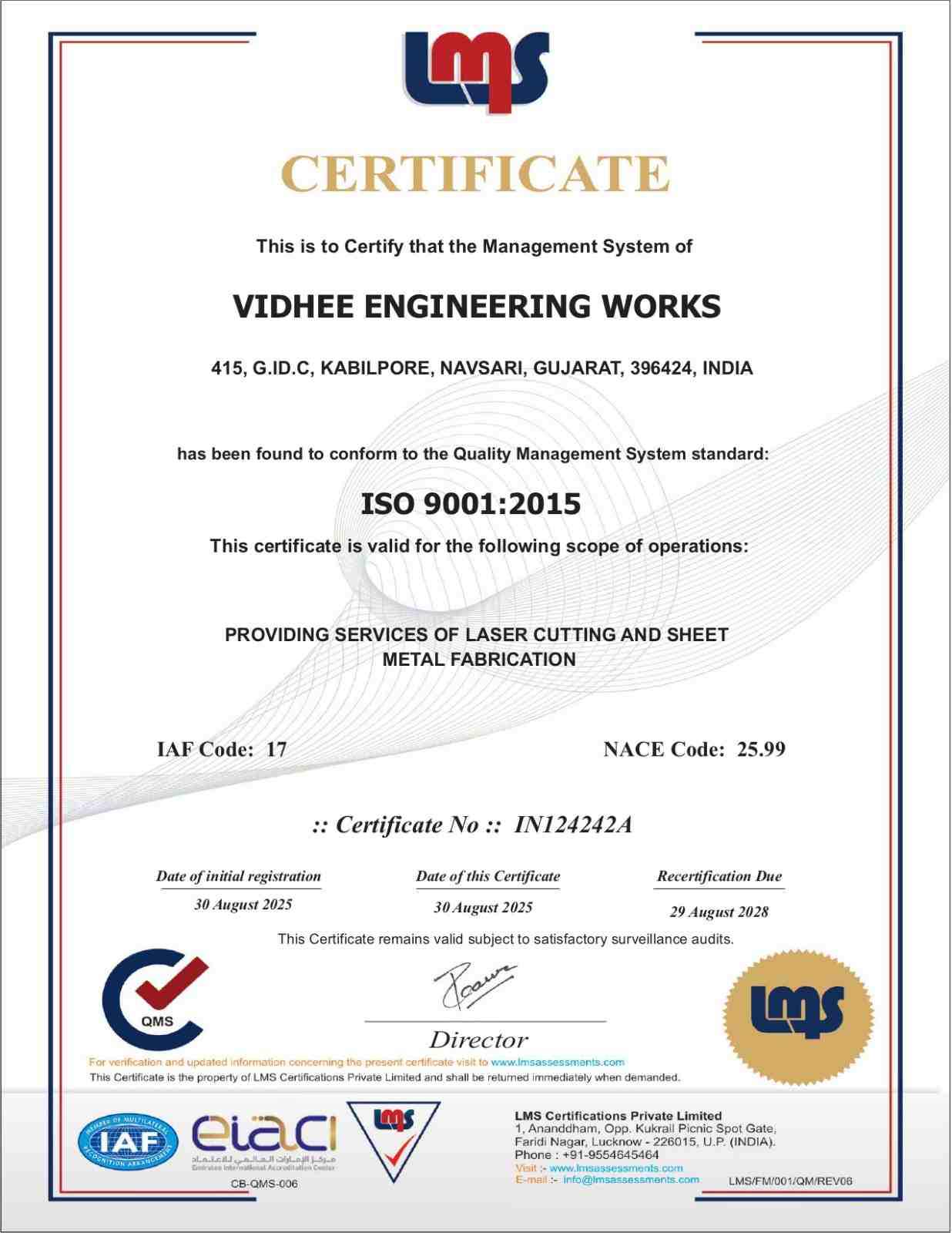
We work with cold-rolled and hot-rolled steel, stainless steel and aluminium, and take on everything from a single prototype to repeat production batches for OEMs, panel builders and engineering firms across Gujarat and the rest of India. Our quality system is certified to ISO 9001:2015, and every job begins with a drawing review, so problems are caught on screen rather than on the shop floor.
Parts and products made at our Navsari unit. Click a product to see its details.
 L&T-MHI Power Turbine Generators Pvt. Ltd. - Power turbine generators, Hazira, Surat
 Narayan Oil & Gas Burners Co. - Industrial oil and gas burners, Surat
 D. S. Topiwala Enterprise - Textile machinery, Navsari
 Shapotools
 PS
 NIF
A clear four-step process from your drawing to dispatch — the same team handles your job from quote to delivery.
Send your drawing, sketch or sample with material, thickness and quantity — a CAD file or a rough sketch both work.
We check feasibility, suggest improvements where useful and quote a price with a committed delivery date.
Your part is laser cut, CNC bent, welded and finished in-house, so one team controls quality from blank to dispatch.
Every batch is checked against your drawing under our ISO 9001:2015 quality system, then packed and dispatched.
Typical parts and assemblies we produce for industrial and commercial clients. Don’t see your part? Send us the drawing and we’ll confirm feasibility.

Practical questions to ask when choosing a sheet metal fabrication company in Gujarat: in-house processes, quality, drawing review...
Read Article about How to Choose a Sheet Metal Fabrication Company in Gujarat
A practical guide for OEMs and overseas buyers outsourcing sheet metal work to India: RFQ packs, first-article approval, quality...
Read Article about How to Outsource Sheet Metal Fabrication to India: A Practical Guide
How to take a sheet metal part from first prototype through a pilot lot to steady production, with a design freeze, first-article checks...
Read Article about Sheet Metal Prototyping: From First Sample to Pilot Lot to ProductionWe have been fabricating in Navsari since 2004. Every job is produced in-house on our own CNC and laser machinery, under an ISO 9001:2015 certified quality system, by the same team that quotes it.
Fabricating for industrial and commercial clients from GIDC Kabilpore, Navsari since 2004.
Quality management system certified for laser cutting and sheet metal fabrication services (Certificate No. IN124242A).
CNC laser cutting and CNC press brake bending on our own shop floor — no outside job-work.
Every part is made to your specification across all metal gauges, from one prototype to bulk batches.
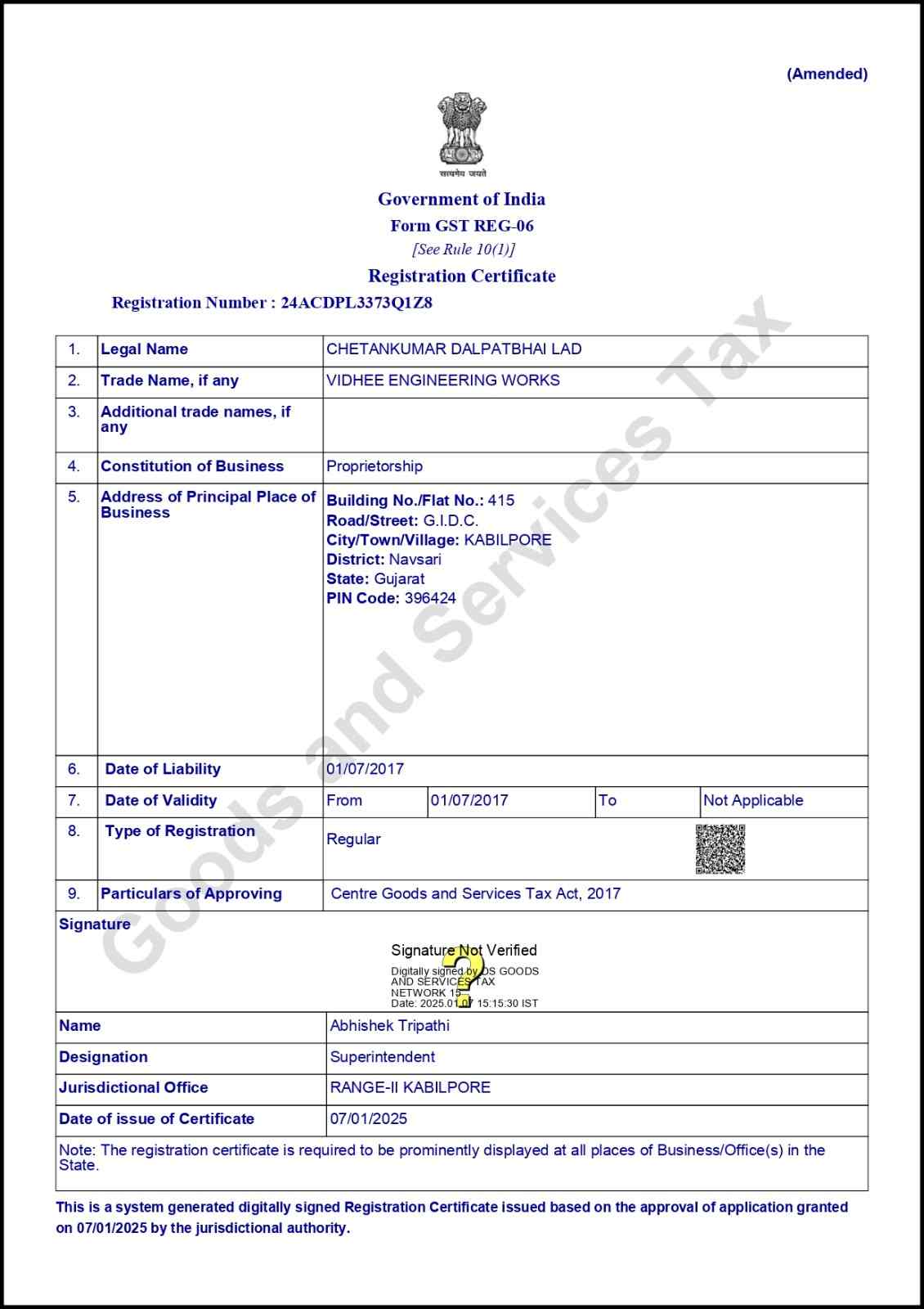
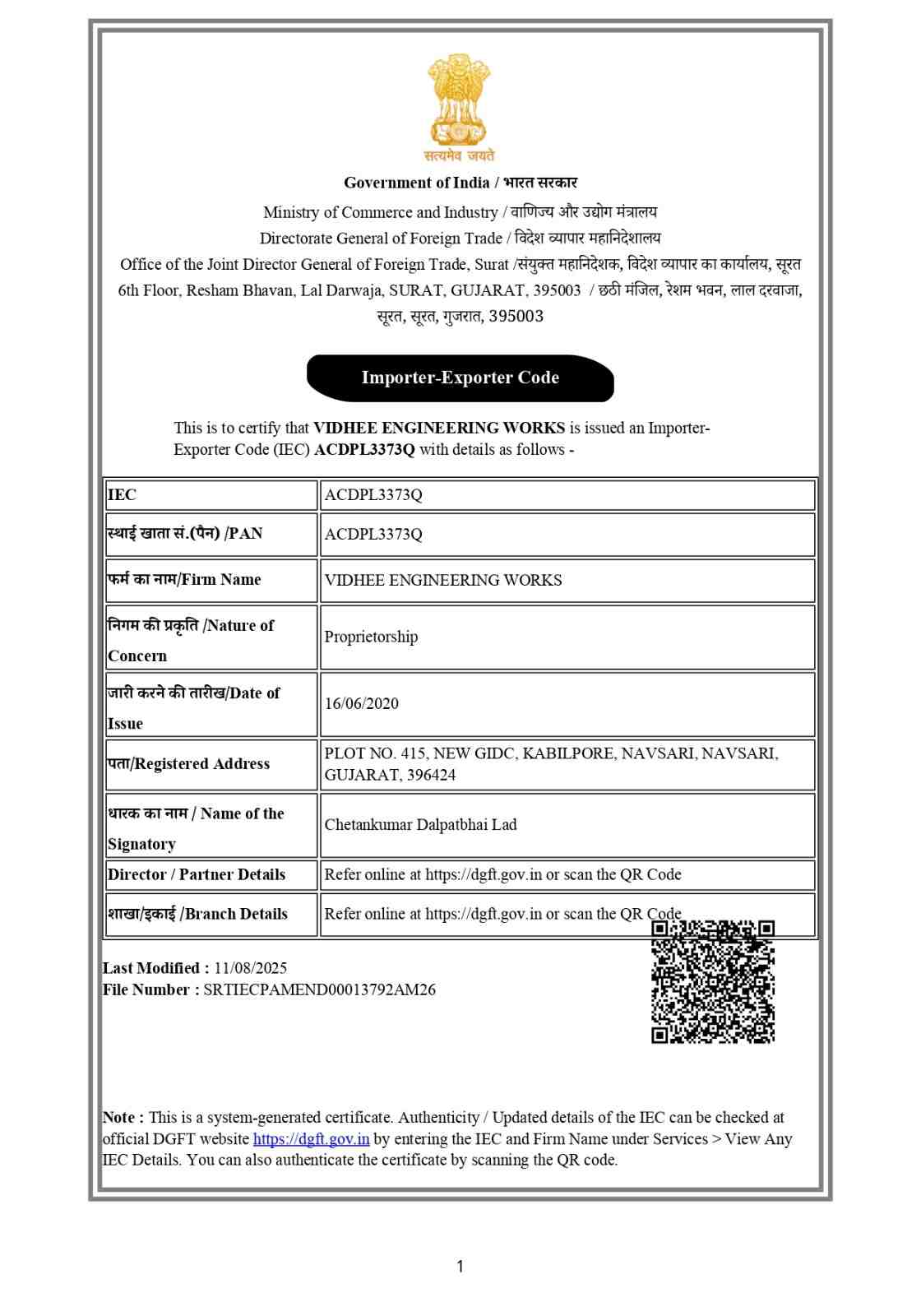
GST registered in Gujarat (GSTIN 24ACDPL3373Q1Z8), with a DGFT Importer-Exporter Code for export orders.
Delivery dates are agreed at the time of quotation and tracked through to dispatch.
Share your material, thickness and quantity — we’ll review it and come back with a quote and a delivery date, not just a price.